Runge (sí, el de la esfera) dijo que «todo conduce necesariamente al paisaje» y no puedo estar más de acuerdo. Absolutamente todo lo que vemos es, o contiene, un paisaje, aunque a veces nos neguemos a reconocerlo con la excusa de que «no es naturaleza». Es tan importante que hasta la UNESCO recomienda su protección (cosa que no tardaremos en agradecer, viendo el camino que llevamos).
Showing posts with label Tate. Show all posts
Showing posts with label Tate. Show all posts
Wednesday, April 17, 2013
Paisajes antiguos y modernos
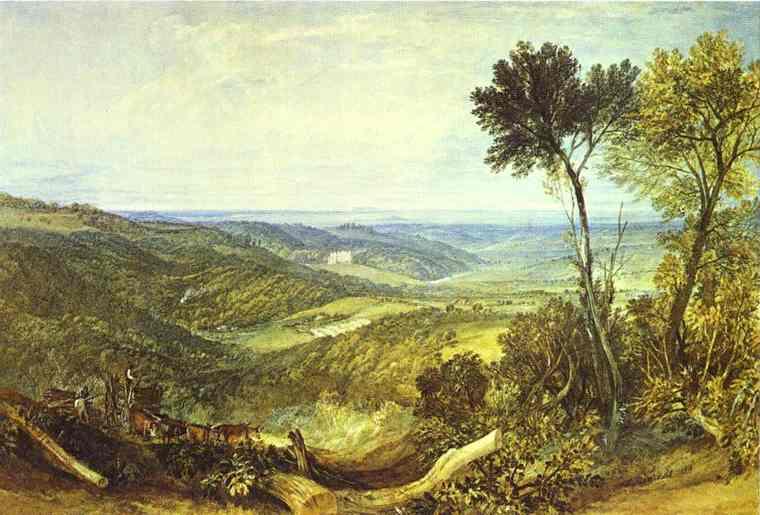
Hay dos tipos de personas, a las que les gustan los retratos y a las que les gustan los paisajes. Personalmente soy una de las personas de paisaje, en mi cámara de fotos raramente encontrarás un primer plano de una persona, y desde luego, ni una foto mía (no es que piense que las fotos roban el alma, pero casi).
Runge (sí, el de la esfera) dijo que «todo conduce necesariamente al paisaje» y no puedo estar más de acuerdo. Absolutamente todo lo que vemos es, o contiene, un paisaje, aunque a veces nos neguemos a reconocerlo con la excusa de que «no es naturaleza». Es tan importante que hasta la UNESCO recomienda su protección (cosa que no tardaremos en agradecer, viendo el camino que llevamos).
Runge (sí, el de la esfera) dijo que «todo conduce necesariamente al paisaje» y no puedo estar más de acuerdo. Absolutamente todo lo que vemos es, o contiene, un paisaje, aunque a veces nos neguemos a reconocerlo con la excusa de que «no es naturaleza». Es tan importante que hasta la UNESCO recomienda su protección (cosa que no tardaremos en agradecer, viendo el camino que llevamos).


Thursday, March 21, 2013
Landscape Art, Depictions of a Nature That Might Cease to Exist
I’m supposed to talk about pretty landscapes and painters from the 17th century until now that have slowly incorporated said landscapes into their paintings more and more, until finally Landscape became its own genre. And fine: nature is nice; butterflies, yay. Instead, I’d like to note that BP is sponsoring this. BP! The company that is ruining similar landscapes to the ones we’re meant to enjoy in the exhibition. Did the corporation’s discussion for putting this on the agenda include a “yeah, we better show them now before the destruction and decimation of our planet is complete”?

Meindert Hobbema,
The Avenue at Middleharnis, 1689.
Oil on canvas, 103.5 x 141 cm.
The National Gallery, London.
The extraction and ceaseless use of natural gasses and oil is doing palpable and appalling things to the environment and atmosphere. Nevertheless, as an international society, we choose to ignore the annihilation of our ecosystems and extinction of animals so that we can drive Hummers in already over-crowded cities and wear our sweaters in excessively air-conditioned rooms. We live in deserts but have lush, green lawns. We have large, rarely used but immaculately maintained personal swimming pools. We need BP as much as BP needs us and I think it’s time we become less dependent on one another.

Jules Dupré, Sunset after a Storm, 1851.
Oil on wood, 47 x 56.5 cm.
Musée du Louvre, Paris.
Don’t get me wrong, I think it’s amazing that such a large, well-known corporation is supporting the arts. I live in continual fear that one day I will wake up and society will not be able to provide music/art/drama classes for students and that museums and theatres will close and never open again because the skills will no longer be developed. But does it really have to be BP? Surely this is the most hypocritical exhibition to have ever existed.

J.M.W. Turner, Calais Pier, with French Poissards Preparing for Sea: an English Packet Arriving, 1803.
Oil on canvas, 172 x 240 cm.
The National Gallery, London.
I am argued out. How about you walk or cycle over to the Tate Britain to enjoy breath-taking landscapes in Looking at the View? Rather, sit in your own backyard or a park and read Landscapes by Émile Michel.
-Le Lorrain Andrews

Meindert Hobbema,
The Avenue at Middleharnis, 1689.
Oil on canvas, 103.5 x 141 cm.
The National Gallery, London.
The extraction and ceaseless use of natural gasses and oil is doing palpable and appalling things to the environment and atmosphere. Nevertheless, as an international society, we choose to ignore the annihilation of our ecosystems and extinction of animals so that we can drive Hummers in already over-crowded cities and wear our sweaters in excessively air-conditioned rooms. We live in deserts but have lush, green lawns. We have large, rarely used but immaculately maintained personal swimming pools. We need BP as much as BP needs us and I think it’s time we become less dependent on one another.

Jules Dupré, Sunset after a Storm, 1851.
Oil on wood, 47 x 56.5 cm.
Musée du Louvre, Paris.
Don’t get me wrong, I think it’s amazing that such a large, well-known corporation is supporting the arts. I live in continual fear that one day I will wake up and society will not be able to provide music/art/drama classes for students and that museums and theatres will close and never open again because the skills will no longer be developed. But does it really have to be BP? Surely this is the most hypocritical exhibition to have ever existed.

J.M.W. Turner, Calais Pier, with French Poissards Preparing for Sea: an English Packet Arriving, 1803.
Oil on canvas, 172 x 240 cm.
The National Gallery, London.
I am argued out. How about you walk or cycle over to the Tate Britain to enjoy breath-taking landscapes in Looking at the View? Rather, sit in your own backyard or a park and read Landscapes by Émile Michel.
-Le Lorrain Andrews
Tuesday, September 4, 2012
Paint the Sky with Van Gogh
On the over-arching subject of Symbolism, I’d have to say I am a fan. Beautiful colours and images which ultimately stand for something much deeper and more heartfelt than what is in front of you; colours and symbols which are meant to touch people around the world and bring them together using one piece of art. When it happens successfully, it’s truly amazing.
Take Vincent Van Gogh’s Starry Night (below), a piece recognised across time and place that enlists a quieting of the mind and moment of inner peace, which ultimately stirs in some of us a recognition of the fact that there may be more than just this life. However, some, namely Boy Meets World’s Cory Matthews, view this painting as an attack, a war over a small town. What do you see? More, how does it make you feel?

Vincent van Gogh, The Starry Night, 1889.
Oil on canvas, 73.7 x 92.1 cm.
Museum of Modern Art, New York.
Many Symbolists found modern cities over-bearing and claustrophobic, taking solace in open and expansive bodies of land, water, and sky. Who could blame them, what is more likely to make you smile from the inside out? Massive buildings, smog, and honking horns? Or tall, green trees swaying in the breeze, running barefoot in uncut grasses, and the sun on your face?
Feeling stuck in a season or landscape? Get yourself over to the National Gallery of Scotland before 14 October 2012 and check out all of the Symbolist landscape artists including Van Gogh. Also bring this ebook along to compare with the passing scenery on the way: Vincent van Gogh.
-Le Lorrain Andrews
Take Vincent Van Gogh’s Starry Night (below), a piece recognised across time and place that enlists a quieting of the mind and moment of inner peace, which ultimately stirs in some of us a recognition of the fact that there may be more than just this life. However, some, namely Boy Meets World’s Cory Matthews, view this painting as an attack, a war over a small town. What do you see? More, how does it make you feel?

Vincent van Gogh, The Starry Night, 1889.
Oil on canvas, 73.7 x 92.1 cm.
Museum of Modern Art, New York.
Many Symbolists found modern cities over-bearing and claustrophobic, taking solace in open and expansive bodies of land, water, and sky. Who could blame them, what is more likely to make you smile from the inside out? Massive buildings, smog, and honking horns? Or tall, green trees swaying in the breeze, running barefoot in uncut grasses, and the sun on your face?
Feeling stuck in a season or landscape? Get yourself over to the National Gallery of Scotland before 14 October 2012 and check out all of the Symbolist landscape artists including Van Gogh. Also bring this ebook along to compare with the passing scenery on the way: Vincent van Gogh.
-Le Lorrain Andrews
Monday, August 13, 2012
Munch, un peintre horrifié ?

Edvard Munch, Le Cri, 1893.
Tempera et crayon sur carton, 91 x 73,5 cm.
Nasjonalmuseet, Oslo.
Entre 1883 et 1884, l’éruption du volcan indonésien Krakatoa est perçue jusqu’en Europe et enflamme le ciel norvégien. Dix ans plus tard, Edvard Munch s’inspire de ces couleurs flamboyantes pour peindre Le Cri. Un personnage fantomatique se tient le visage et semble hurler, debout au sein d’un paysage dénudé, enflammé à l’horizon par un ardent soleil couchant.
Plusieurs versions de cette peinture sont conservées.
En général, les critiques classent Munch dans la catégorie des peintres touchés par les épreuves de la vie, ce qui doit se refléter dans ses toiles.
L’exposition de la Tate Modern tente d’atténuer ce jugement en montrant comment il a aussi été inspiré par de simples événements du quotidien de la vie des Norvégiens au début du xxe siècle.
Le spectateur a souvent l’impression que les personnages de Munch marchent vers lui ; ce sont des acteurs en plein action. Munch peut être considéré comme l’un des précurseurs des plans du cinéma, sans doute influencé, à son époque, par son goût pour la photographie.
Si son histoire vous intrigue, vous pouvez consulter Munch, en version imprimée et ebook.
Friday, July 27, 2012
Munch, ese que pintó El grito
Crees que sabes todo lo que hay que saber sobre Edvard Munch, ¿verdad? A tu juicio, era un solitario de alma atormentada, que pintaba escenas de trauma y desamparo y que se dejaba llevar por la angustia y la melancolía... ¿van por ahí los tiros? Pues la nueva exposición de la Tate Modern pone tu erudición sobre el noruego en entredicho y te invita a explorar las facetas más desconocidas de su personalidad a través del análisis de los temas que abordó en sus obras. Los de la Tate quieren que conozcamos más a un artista que era mucho más que «el tipo ese que pintó El grito» y nos enseñan, entre otras cosas, que su trabajo estuvo fuertemente influenciado por la deficiencia visual degenerativa que padecía y por su creciente interés por la fotografía.
Para la comunidad artística, la posibilidad de descubrir al hombre que se esconde tras el pintor y de conocer sus verdaderas motivaciones y las fuentes de inspiración de todas sus obras o de todos los periodos artísticos de su carrera constituye un sueño hecho realidad. Sin embargo, de algún modo, al completar el puzzle se pierde el halo de misterio que lo envuelve y se desvanece el carácter único y desgarrador de sus cuadros. Parece que conocer los detalles banales de la vida del artista requiere el sacrificio de su carácter legendario y del atractivo que emana el Munch torturado y ajeno al amor, ese que pintó sus obras maestras en un frenesí de contradicciones actuando como catarsis de sus traumas de juventud.

Edvard Munch, El grito, 1893.
Témpera y cera sobre cartón, 91 x 73,5 cm.
Nasjonalmuseet, Oslo.
La nueva mirada que los expertos han arrojado sobre Munch revela que conocía muy bien las técnicas y los efectos visuales que empleaba y que su principal motivación para retomar sus temas preferidos una y otra vez no era otra que su viabilidad comercial. Si es así, el tipo ese sabía jugar sus cartas... Tal vez, la Tate debería tomar ejemplo y ofrecernos a ti y a mí lo que queremos, es decir, al Munch abatido y desesperado que creemos conocer. Según tengo entendido, El grito no se vendió nada mal...
Tienes la oportunidad de visitar la exposición Edvard Munch: The Modern Eye en la Tate Modern hasta el 14 de octubre de 2012 y ver cómo se te cae un mito o llevarte a casa este eBook y disfrutar de la aflicción de Munch en su apogeo.
Munch ado about nothing
So you think you know Edvard Munch? Think again. That’s the tag-line for the Tate Modern‘s new Munch exhibition, whose premise is that Munch is an under-analysed artist, pigeonholed as a troubled loner and worthy of reassessment. They profess that there were more sides to his personality than just ‘the man who painted The Scream’, and the exhibition seeks to find out what else made him tick through an analysis of the other themes in his work, such as his debilitating eye disease, the theatre and his burgeoning interest in film photography. They implore us to see past the “angst-ridden and brooding Nordic artist who painted scenes of isolation and trauma”, but do people really want to strip off the interesting layers to reveal the normal, everyday Eddie underneath?
Within the art community, it is a dream come true to find another piece of the missing puzzle, to “discover” the man behind the artist and to know exactly what his motives and inspirations were for every piece or artistic period in his life. However, representing the “whole picture” detracts from what made the artist interesting or unique in the first place, or even what makes the paintings so breathtaking. It is scientifically proven* that the longer you spend with a partner, the less interesting they become; in this way, the more you know about the banal aspects of an artist’s life, the less legendary they are. Stick to what makes Munch alluring – a tortured, unloved soul who expresses himself through his harrowing, yet awe-inspiring paintings.
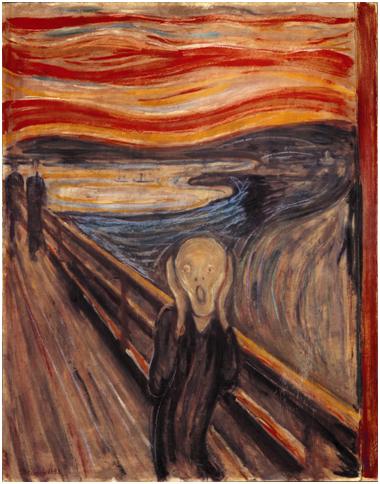
Edvard Munch, The Scream, 1893.
Tempera and crayon on cardboard, 91 x 73,5 cm.
Nasjonalmuseet, Oslo.
It is more than agreeable to believe that Munch painted his masterpieces in an oxymoronic frenzy of despair – catharsis for his traumatic youth. But this new wave of “understanding” of every aspect of Munch’s life has led to an interpretation that Munch was well aware of the techniques and visual effects that he employed to such devastating effect, and that it was in fact the commercial viability of reproducing a popular painting that drove Munch to rework his favoured themes time and again. If this is the case, then Munch knew how to play us like a fiddle.
Have these people learned nothing from Munch? Angst sells, big time, and if the Tate wants to increase its footfall, it too should sell out and give the people what they want – a slice of the despondent Munch we think we know. I’ve heard that The Scream is supposed to be a pretty good painting...
Edvard Munch: The Modern Eye is showing at the Tate Modern from 28 June – 14 October 2012. Or, to view some of Munch’s popular works (including The Scream), why not try this Munch art e-book?
*it is not really scientifically proven.
Monday, July 2, 2012
Turner, Monet y Twombly: Un trío extraño
¿Qué pueden tener en común un romántico inglés, un impresionista francés y un simbolista estadounidense? Esto es lo que se nos plantea en la exposición de la Tate de Liverpool llamada «Turner Monet Twombly: Later Paintings». Sinceramente yo aún estoy tratando de averiguarlo.
Haciendo un recuento de la carrera artística de cada uno, queda bastante claro que sus obras tienen poco, si no nada, que ver unas con otras, lo que te hace preguntarte cómo diantres se le ha podido ocurrir a nadie agruparlos en una exposición. Sin embargo, si nos centramos en los últimos, digamos 20, años de sus vidas, supongo que podría decirse que la obra de Turner fue transformándose en un incipiente impresionismo (ya fuera esa su intención o no), y la de Twombly, especialmente Blooming (de Floración), profundiza en el interés de este movimiento por la naturaleza, que era precisamente el tema más apreciado por Monet.
Pongamos como ejemplo estos dos cuadros. Supongo que, mirándolos con los ojos entornados y bizqueando, alguien podría encontrar el parecido entre el río San Luca de Turner (izquierda) y el San Giorgio de Monet (derecha).


Claude Monet, San Giorgio Maggiore, 1908.
Óleo sobre lienzo, 59,2 x 81,2 cm.
National Museum Wales, Cardiff.
Y quizá, forzando un poco más la vista, se puedan encontrar las similitudes con la colección Estaciones, de Twombly:

Cy Twombly, Cuatro estaciones: Invierno, 1993-1994.
Acrílico, óleo y lapicero sobre lienzo, 322,9 x 230 cm.
The Tate Gallery, Londres.
Personalmente, creo que Twombly debería considerarse afortunado por formar parte de este peculiar grupo junto a estos dos grandes maestros, mientras que Monet y Turner deberían preguntarse cómo ha ocurrido y, quizá, interponer una demanda por calumnias. ¿Qué crees?
Compara y contrasta las obras de estos prolíficos artistas en la exposición de la Tate de Liverpool Turner Monet Twombly: Later Paintings hasta el 28 de octubre de 2012. También puedes admirar los cuadros de Monet y Turner en casa, con estos libros de su vida y obras maravillosamente ilustrados, Turner y Monet.
Haciendo un recuento de la carrera artística de cada uno, queda bastante claro que sus obras tienen poco, si no nada, que ver unas con otras, lo que te hace preguntarte cómo diantres se le ha podido ocurrir a nadie agruparlos en una exposición. Sin embargo, si nos centramos en los últimos, digamos 20, años de sus vidas, supongo que podría decirse que la obra de Turner fue transformándose en un incipiente impresionismo (ya fuera esa su intención o no), y la de Twombly, especialmente Blooming (de Floración), profundiza en el interés de este movimiento por la naturaleza, que era precisamente el tema más apreciado por Monet.
Pongamos como ejemplo estos dos cuadros. Supongo que, mirándolos con los ojos entornados y bizqueando, alguien podría encontrar el parecido entre el río San Luca de Turner (izquierda) y el San Giorgio de Monet (derecha).


Claude Monet, San Giorgio Maggiore, 1908.
Óleo sobre lienzo, 59,2 x 81,2 cm.
National Museum Wales, Cardiff.
Y quizá, forzando un poco más la vista, se puedan encontrar las similitudes con la colección Estaciones, de Twombly:

Cy Twombly, Cuatro estaciones: Invierno, 1993-1994.
Acrílico, óleo y lapicero sobre lienzo, 322,9 x 230 cm.
The Tate Gallery, Londres.
Personalmente, creo que Twombly debería considerarse afortunado por formar parte de este peculiar grupo junto a estos dos grandes maestros, mientras que Monet y Turner deberían preguntarse cómo ha ocurrido y, quizá, interponer una demanda por calumnias. ¿Qué crees?
Compara y contrasta las obras de estos prolíficos artistas en la exposición de la Tate de Liverpool Turner Monet Twombly: Later Paintings hasta el 28 de octubre de 2012. También puedes admirar los cuadros de Monet y Turner en casa, con estos libros de su vida y obras maravillosamente ilustrados, Turner y Monet.
Friday, June 29, 2012
Turner, Monet und Twombly
Geboren im 18., 19., bzw. 20. Jahrhundert; ein Brite, ein Franzose und ein Amerikaner; Romantiker, Impressionist und abstrakter Expressionist. Drei Maler, die von ihren Grundvoraussetzungen her unterschiedlicher kaum sein könnten, und dennoch scheinen J. M. W. Turner, Claude Monet und Cy Twombly irgendetwas gemeinsam zu haben, das einen Vergleich der Werke ihrer jeweils letzten Schaffensjahre rechtfertigt.
Versuchen wir einmal den riesigen Pulk an Werken ein wenig zu vergessen, die ihren jeweiligen Stil „allgemein“ kennzeichnen und werfen wir ausschließlich einen Blick auf ihre letzten etwa 20 Jahre. So wird vor allem bei Turner die Wandlung des Stils in Richtung einer impressionistischen Malweise erkennbar, die dann wiederum mit der Monets‘ vergleichbar wird. Spätestens jedoch, wenn man die Augen zusammenkneift und mit etwas Fantasie die Bilder betrachtet, sollte sich auch bei dem Nicht-Kunsthistoriker ein Gefühl von Ähnlichkeit einstellen.

J.M.W. Turner, The Rio San Luca alongside the Palazzo Grimani, with the Church of San Luca, um 1840.
Gouache, Bleistift und Aquarell auf Papier, 19,1 x 28,1 cm.
The Tate Gallery, London.

Claude Monet, San Giorgio Maggiore, 1908.
Öl auf Leinwand, 59,2 x 81,2 cm.
National Museum Wales, Cardiff.
Aber wie lässt sich Twombly einreihen? Vom Impressionismus scheint er weit entfernt und auch das Augenzusammenkneifen ändert nichts an dieser Feststellung. Als abstrakter Expressionist folgt er Turner und Monet weniger formal als vielmehr in der thematischen Intention, in der Herausforderung traditioneller Darstellungsweisen und dem Versuch die Grenzen der Malerei, und vielleicht auch die eigenen, auszutesten.

Cy Twombly, Quattro Stagioni: Inverno, 1993-1994.
Acryl, Öl und Bleistift auf Leinwand, 322,9 x 230 cm.
The Tate Gallery, London.
Drei großartige Künstler, die in dieser Kombination noch bis zum 28. Oktober 2012 in der Ausstellung: Turner Monet Twombly: Later Paintings in der Tate Liverpool bewundert werden können. Für diejenigen, die sich nicht nur auf die letzten 20 Jahre Turners und Monets beschränken möchten, gibt es diese wunderschönen Bücher zu ihrem Leben und Werk auch für zu Haus.
Versuchen wir einmal den riesigen Pulk an Werken ein wenig zu vergessen, die ihren jeweiligen Stil „allgemein“ kennzeichnen und werfen wir ausschließlich einen Blick auf ihre letzten etwa 20 Jahre. So wird vor allem bei Turner die Wandlung des Stils in Richtung einer impressionistischen Malweise erkennbar, die dann wiederum mit der Monets‘ vergleichbar wird. Spätestens jedoch, wenn man die Augen zusammenkneift und mit etwas Fantasie die Bilder betrachtet, sollte sich auch bei dem Nicht-Kunsthistoriker ein Gefühl von Ähnlichkeit einstellen.

J.M.W. Turner, The Rio San Luca alongside the Palazzo Grimani, with the Church of San Luca, um 1840.
Gouache, Bleistift und Aquarell auf Papier, 19,1 x 28,1 cm.
The Tate Gallery, London.

Claude Monet, San Giorgio Maggiore, 1908.
Öl auf Leinwand, 59,2 x 81,2 cm.
National Museum Wales, Cardiff.
Aber wie lässt sich Twombly einreihen? Vom Impressionismus scheint er weit entfernt und auch das Augenzusammenkneifen ändert nichts an dieser Feststellung. Als abstrakter Expressionist folgt er Turner und Monet weniger formal als vielmehr in der thematischen Intention, in der Herausforderung traditioneller Darstellungsweisen und dem Versuch die Grenzen der Malerei, und vielleicht auch die eigenen, auszutesten.

Cy Twombly, Quattro Stagioni: Inverno, 1993-1994.
Acryl, Öl und Bleistift auf Leinwand, 322,9 x 230 cm.
The Tate Gallery, London.
Drei großartige Künstler, die in dieser Kombination noch bis zum 28. Oktober 2012 in der Ausstellung: Turner Monet Twombly: Later Paintings in der Tate Liverpool bewundert werden können. Für diejenigen, die sich nicht nur auf die letzten 20 Jahre Turners und Monets beschränken möchten, gibt es diese wunderschönen Bücher zu ihrem Leben und Werk auch für zu Haus.
Pas sur la bouche !
Turner, Monet, Twombly : quel(s) point(s) commun(s) ? Vous avez entendu parler des deux premiers comme étant des maîtres, et le 3ème vous est peut-être totalement inconnu, à moins que vous vous intéressiez à l’art contemporain…

J.M.W. Turner, View on a Cross-Canal near the Arsenal, (Vue sur le Canal), 1840.
Aquarelle et gouache, 19,1 x 28 cm.
The Tate Gallery, Londres.
Le point commun, c’est le ressenti. Ces trois peintres se sont éloignés des codes réalistes attendus par la bourgeoisie de leur époque et ont peint ce qu’ils ressentaient devant le sujet… Que peint Turner dans les Baleines : les animaux ou le ciel et l’écume ? Que peint Monet dans San Giorgio Maggiore, les monuments ou l’impression de lumière bleutée ? Et que dire de Twombly, qui dans sa série Lepanto, interprète par des taches et des coulures une bataille navale du xvie siècle ?
Pourquoi s’intéresser à leur dernière période créative ? Probablement parce qu’à un moment de leur carrière, ils ont tous les trois « abandonné » quelque chose, pour mieux se consacrer à la recherche de ce qui les intéressait vraiment : la lumière pour Turner, la lumière, le brouillard et la pluie pour Monet.

Claude Monet, San Giorgio Maggiore, 1908.
Huile sur toile, 60 x 80 cm.
National Museum of Wales, Cardiff.
Voyez le monde tel que le voyaient Turner, Monet et Twombly, avec l’exposition Turner Monet Twombly: Later Paintings, présentée jusqu’au 28 octobre 2012 à la Tate Liverpool. Mais évitez de faire ce qu’avait fait une visiteuse d’une autre exposition consacrée à Twombly : même si cela est tentant, n’embrassez pas les toiles !!

Cy Twombly, Quattro Stagioni: Inverno, (Les Quatre Saisons : l’hiver), 1993-1994.
Acrylique, huile et crayon sur toile, 322,9 x 230 cm.
The Tate Gallery, Londres.

J.M.W. Turner, View on a Cross-Canal near the Arsenal, (Vue sur le Canal), 1840.
Aquarelle et gouache, 19,1 x 28 cm.
The Tate Gallery, Londres.
Le point commun, c’est le ressenti. Ces trois peintres se sont éloignés des codes réalistes attendus par la bourgeoisie de leur époque et ont peint ce qu’ils ressentaient devant le sujet… Que peint Turner dans les Baleines : les animaux ou le ciel et l’écume ? Que peint Monet dans San Giorgio Maggiore, les monuments ou l’impression de lumière bleutée ? Et que dire de Twombly, qui dans sa série Lepanto, interprète par des taches et des coulures une bataille navale du xvie siècle ?
Pourquoi s’intéresser à leur dernière période créative ? Probablement parce qu’à un moment de leur carrière, ils ont tous les trois « abandonné » quelque chose, pour mieux se consacrer à la recherche de ce qui les intéressait vraiment : la lumière pour Turner, la lumière, le brouillard et la pluie pour Monet.

Claude Monet, San Giorgio Maggiore, 1908.
Huile sur toile, 60 x 80 cm.
National Museum of Wales, Cardiff.
Quant à Twombly, à la fin de sa vie, il s’intéressait à l’aléatoire, un peu comme Pollock avant lui : alors que le premier peignait en laissant goutter le pinceau au dessus de la toile posée à plat par terre, Twombly appliquait des surplus de peinture sur la toile verticale, et la laissait s’écouler vers le bas du tableau (Lepanto, Bacchus)...
Voyez le monde tel que le voyaient Turner, Monet et Twombly, avec l’exposition Turner Monet Twombly: Later Paintings, présentée jusqu’au 28 octobre 2012 à la Tate Liverpool. Mais évitez de faire ce qu’avait fait une visiteuse d’une autre exposition consacrée à Twombly : même si cela est tentant, n’embrassez pas les toiles !!

Cy Twombly, Quattro Stagioni: Inverno, (Les Quatre Saisons : l’hiver), 1993-1994.
Acrylique, huile et crayon sur toile, 322,9 x 230 cm.
The Tate Gallery, Londres.
En attendant, entrez dans la douce lumière des aquarelles et des huiles de Turner, et laissez-vous rafraîchir par les brumes de Monet avec les ouvrages Turner et Monet.
Turner, Monet, Twombly: An Unlikely Trio
1700s, 1800s, 1900s. British, French, American. Romanticism, Impressionism, Symbolism. Looking at these stats, one might wonder what J.M.W. Turner, Claude Monet, and Cy Twombly have in common. Frankly, I’m still trying to work it out for myself.
Through the bulk of each of these artists’ careers, it is quite clear that their works have very little to absolutely nothing in common, causing one to wonder how on earth they’ve been grouped together in the first place. However, if you focus on the last twenty or so odd years of each other their lives, I suppose it is possible to see that Turner’s work slowly morphed into Impressionism, whether he intended it that way or not. While Twombly’s works, especially Blooming, delve into Impressionism with a focus on nature, clearly Monet’s forte.
Take these two paintings for example. I suppose one could, with their eyes crossed and squinting, relate Turner’s Rio San Luca to Monet’s San Giorgio (below).

J.M.W. Turner, The Rio San Luca alongside the Palazzo Grimani, with the Church of San Luca, c. 1840.
Gouache, pencil and watercolour on paper, 19.1 x 28.1 cm.
The Tate Gallery, London.

Claude Monet, San Giorgio Maggiore, 1908.
Oil on canvas, 59.2 x 81.2 cm.
National Museum Wales, Cardiff.
And maybe, one could close their left eye while squinting with the right and see the similarities Twombly has to offer, as in his Seasons collection:

Cy Twombly, Quattro Stagioni: Inverno, 1993-1994.
Acrylic, oil, and pencil on canvas, 322.9 x 230 cm.
The Tate Gallery, London.
If you ask me, Twombly should consider himself quite lucky to be grouped with such influential artists, while Turner and Monet should be questioning how this came to be and perhaps looking to sue on the grounds of libel, slander, and defamation. What do you think? Am I the crazy one?
Compare and contrast the works of these prolific artists at Tate Liverpool’s exhibition: Turner Monet Twombly: Later Paintings, on until 28 October 2012. Also, admire the works of Monet and Turner at home with these beautifully illustrated books on their lives and works Turner and Monet, both available in print and ebook format.
-Le Lorrain Andrews
Through the bulk of each of these artists’ careers, it is quite clear that their works have very little to absolutely nothing in common, causing one to wonder how on earth they’ve been grouped together in the first place. However, if you focus on the last twenty or so odd years of each other their lives, I suppose it is possible to see that Turner’s work slowly morphed into Impressionism, whether he intended it that way or not. While Twombly’s works, especially Blooming, delve into Impressionism with a focus on nature, clearly Monet’s forte.
Take these two paintings for example. I suppose one could, with their eyes crossed and squinting, relate Turner’s Rio San Luca to Monet’s San Giorgio (below).

J.M.W. Turner, The Rio San Luca alongside the Palazzo Grimani, with the Church of San Luca, c. 1840.
Gouache, pencil and watercolour on paper, 19.1 x 28.1 cm.
The Tate Gallery, London.

Claude Monet, San Giorgio Maggiore, 1908.
Oil on canvas, 59.2 x 81.2 cm.
National Museum Wales, Cardiff.
And maybe, one could close their left eye while squinting with the right and see the similarities Twombly has to offer, as in his Seasons collection:

Cy Twombly, Quattro Stagioni: Inverno, 1993-1994.
Acrylic, oil, and pencil on canvas, 322.9 x 230 cm.
The Tate Gallery, London.
If you ask me, Twombly should consider himself quite lucky to be grouped with such influential artists, while Turner and Monet should be questioning how this came to be and perhaps looking to sue on the grounds of libel, slander, and defamation. What do you think? Am I the crazy one?
Compare and contrast the works of these prolific artists at Tate Liverpool’s exhibition: Turner Monet Twombly: Later Paintings, on until 28 October 2012. Also, admire the works of Monet and Turner at home with these beautifully illustrated books on their lives and works Turner and Monet, both available in print and ebook format.
-Le Lorrain Andrews
Subscribe to:
Posts (Atom)