Showing posts with label Scottish National Portrait Gallery. Show all posts

Tuesday, April 16, 2013

El pequeño gran país

Cualquier oportunidad es buena para ir a Escocia. Cuando estuve viviendo allí recuerdo que el eslogan del momento decía que era el mejor país pequeño del mundo. Sinceramente, esto de los eslóganes de las ciudades, regiones o países siempre me ha parecido divertido, sobre todo por la capacidad inventiva de los publicistas para promocionar ciertos lugares con las frases más exageradas. Ahora mismo se me vienen a la cabeza dos de mis favoritos: «Cantabria infinita» y «Castilla y León, cada día un fin de semana». ¿Cómo vamos a dejar de ir a dos lugares así? Combinados, digo yo, sería algo así como el paraíso, ¿no? ―que no se asuste Corocotta que de momento los castellanos se conforman con ser un puerto seco―. Pero volvamos a Escocia. Su eslogan, que conste, no fue inventado por una agencia de publicidad, sino por el anterior Primer Ministro, y es que el país al norte del muro de Adriano es de sobra conocido por su capacidad inventiva. Basta solo pasar una tarde en el pub para que le crezca el orgullo patrio a algún «local» y nos haga una extensa lista de todas aquellas cosas que han inventado a lo largo de la historia. En todos los campos imaginables. Aunque a medida que se vaya calentando la tarde, y las tardes en Escocia solo se calientan de una manera, es muy probable que intente convencernos de que incluso el McDonald’s, la música rock ―los antepasados de Elvis eran de Caledonia (?)―, o hasta el mundo moderno, gracias a la hipótesis de Arthur Herman, son de origen escocés. Algunos defienden, y aquí es donde entra en juego la tesis de Herman, que las causas de todas estas invenciones son el período de la Ilustración que se desarrolló en el siglo XVIII, o el hecho de que fuera el primer país en diseñar un sistema de educación pública general allá por el siglo XV. Yo, por mi parte, siempre he pensado que, aparte de todos estos elementos que seguramente tendrán algo que ver, lo más probable es que si tienes que quedarte en casa todo el año debido al frío que hace lo lógico es que acabes inventando algo, aunque solo sea para distraerte. Y más teniendo en cuenta que por aquel entonces no había televisión.
 

Image

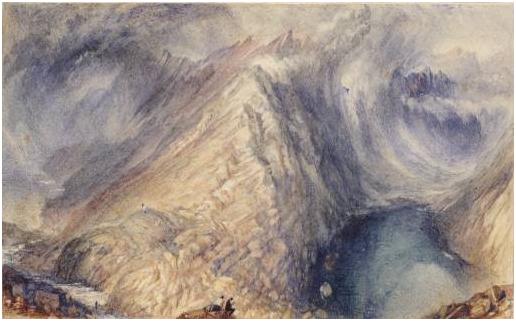
Joseph Mallord William Turner, Loch Coruisk, Skye, 1831. Acuarela sobre papel, 8,9 x 14,3 cm. The National Gallery of Scotland, Edimburgo.


Pero no todo en la vida son inventos y adaptaciones de otros inventos. Escocia está plagada de muchos otros atractivos que no hace falta que me ponga a detallar, ya que ellos solos saben hacerse la publicidad muy bien. Pocos países han conseguido convencer a tanta gente de poseer una cultura ancestral basada en inventos modernos. Y si no os lo creéis investigad sobre los orígenes de la gaita o de la falda. Aquí me veo en la obligación de hacer un inciso y retirar lo que acabo de decir, pues si esto lo leyera por casualidad algún escocés lo más probable es que me tirara al suelo de un barrigazo por llamarle falda a su atuendo nacional, el kilt. Dicho queda. ¿Y qué me decís del monstruo del Lago Ness? Una obra maestra, eso es lo que pienso yo.

Lo que ciertamente es innegable es la historia literaria que atesoran y que ha hecho pasar grandes momentos a generaciones de lectores de todos los países del mundo. Scott, Doyle o Stevenson son solo algunos de los nombres que pueblan en la historia de los grandes escritores y que a mí personalmente más me han hecho disfrutar. Todos ellos encontraron su inspiración en esa ciudad encantada que es Edimburgo y que da hogar a tantas fantasías y leyendas. Y aquí es donde llego al objetivo de esta entrada, pues en Edimburgo es donde hace poco se celebró el premio BP al mejor retrato del año 2012, que obtuvo Aleah Chapin por su obra Auntie. La exposición, BP Portrait Award 2012, tuvo lugar en el magnífico edificio de la Scottish National Portrait Gallery y contó con la presencia de cincuenta y cinco trabajos que se seleccionaron de entre más de 2000 propuestas internacionales. Como curiosidad diremos que el segundo premio se lo llevó el español  Ignacio Estudillo por su obra El abuelo.


Image

Aleah Chapin, Auntie, 2012.
Óleo sobre lienzo, 147,32 x 96,52 cm.


Así que no perdáis la oportunidad de acudir a esta encantadora ciudad, en todos sus sentidos, y presentaros en la Portrait Gallery aunque ya haya pasado la exposición, porque ya habéis visto la cantidad de emociones que la visita os puede deparar. Para profundizar sobre el sujeto de los retratos en Parkstone tenemos el libro de Victoria Charles y Klaus H. Carl, 1000 Portraits of Genius (en inglés), que os puede ayudar a conocer la historia de este arte. 

Tuesday, January 8, 2013

The Face that Launched a Thousand Ships

It was Christopher Marlowe who coined the infamous line regarding Helen of Troy; ‘the face that launched a thousand ships’.

I have to say, I do feel sorry for Helen! Put in a position where she was, effectively, responsible for a ten-year war, loss of lives, and the sacking of a city. I ask: was it even her choice to leave Menelaus? Sure, the story goes that she and Paris fell in love and escaped Sparta and her husband by fleeing to Troy. But, really, what if this wasn’t the true story? What if she was actually in love with Menelaus, and was just kidnapped by Paris? Admittedly, if Paris looked like Orlando Bloom in Troy – and let’s face it, with a brother-in-law like Eric Bana... – fair enough, she might well have decided to go.

BUT... this is all Hollywood conjecture. Menelaus could well have been the Channing Tatum of his day, or, admittedly a character who was a little older; Brad Pitt say. Who’s to say he wasn’t? Throw in charming, persistent, influential (hey, he did win Helen’s hand over all her other suitors, right?!), and you’ve got the beginnings of a pretty good match. Additionally, he was friends with Odysseus, who strikes me as a very decent guy (anyone not familiar with The Odyssey and his ten-year journey to get back to his wife and child, you’re missing out!), now, I may be reading too much into it, but I don’t think Odysseus would have been so loyal to an undeserving man. Paris – the young and brash fellow that he was, obviously did not have that much good sense, and on top of that was selfish. Seriously, endangering your whole country for the sake of one woman (who may not actually have wanted to go with him)... that is not an attractive quality in my opinion. You see, Helen had a lot to put up with!

Image
Leonardo da Vinci
Mona Lisa (La Gioconda), c. 1503-1506.
Oil on poplar panel, 77 x 53 cm.
Musée du Louvre, Paris.


But it is true, that for many of us, beauty is blinding. A beautiful face (sadly) offers a free pass to many things in life, whether it is a cancelled parking ticket, free entry to a club, or free dinner/groceries/drinks, you name it. It has happened. And will happen again. But this is shallow beauty. Once you have met beauty, invariably, you also meet the beast. A pretty exterior unfortunately often comes with an ugly interior – shallowness, vanity, selfishness. This, of course, is not always the case, and I’m sure that many people would say, very rarely the case. But think about it, a face filled with character, one which is not classically beautiful, may often be much more intriguing than that which we have been told is classically beautiful.


Image
Michelangelo
David, 1504.
Marble, 434 cm.
Galleria dell’Academia, Florence.


Take the Mona Lisa – I’d go as far to say that she is not beautiful, but she is certainly enigmatic! She has been a mystery for centuries... who or what inspired her smile?

In a similar manner, The Laughing Cavalier also causes great speculation. Whilst Michelangelo’s David is supposed to be the bees’ knees in terms of masculine perfection, in my opinion, The Laughing Cavalier is far more interesting  - all because of the facial expression.

Helen of Troy, I fear, in all her beauty, lacked this quality of unusualness. It is for this reason (I admit, this is my own personal speculation) why she was regarded as a possession rather than a person: to be stolen away, and then fought over, like a child’s toy. Is this the future that anybody actually aspires to when they wish for beauty? The expression ‘Be careful what you wish for’ springs to mind!


To appreciate the beauty of the unusual and the enigmatic, the BP Portrait Awards exhibition at the Scottish National Portrait Gallery is the must-see exhibition of the New Year. On display until January 27th, 2013, the very best of contemporary portraits showcase the beautiful, the tender, the surprising, and the insightful renderings of the artists’ perceptions of themselves and the people around them. Not to be missed, there is no excuse not to see this inspirational exhibit, especially as it is free of charge! However, if you really cannot make it to Edinburgh, do the next best thing, and check out 1000 Portraits of Genius, written by Victoria Charles and Klaus H. Carl. In this book you will be able to find for yourselves the quirks and the idiosyncrasies which make a face memorable or not: who will become your new Mona Lisa?